Xiamen Tmax Battery Equipments Limited was set up as a manufacturer in 1995, dealing with Laboratory equipments, technology, etc. We have total manufacturing facilities of around 2, 000 square meters and more than 100 staff. Owning a group of experie-nced engineers and staffs, we can bring you not only reliable products and technology, but also excellent services and real value you will expect and enjoy.
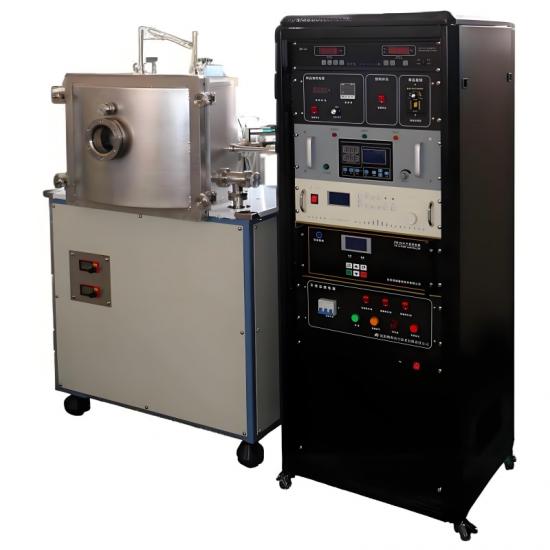
Magnetron Sputtering Coating: A Professional Overview of Equipment and Technology
Overview
Magnetron Sputtering Coating is an advanced thin-film deposition technology widely used in electronics, optics, energy storage, and industrial applications. This technology involves bombarding a target material with high-energy ions within a vacuum chamber, causing atoms or molecules to eject and deposit onto a substrate. The resulting coatings exhibit excellent uniformity, adhesion, and tailored material properties. Modern magnetron sputtering systems integrate precise plasma generation, automated substrate handling, and advanced monitoring systems, allowing for high reproducibility and scalable manufacturing of complex thin films.
Characteristics of the System
A magnetron sputtering coating system possesses several key features that distinguish it from other deposition technologies:
1. Precision Control: Capable of depositing films with nanometer-level thickness and highly uniform surface coverage.
2. Magnetic Field Confinement: Enhanced plasma confinement ensures efficient sputtering and consistent coating across large substrate areas.
3. Material Flexibility: Compatible with metals, alloys, oxides, nitrides, and composite materials.
4. Flexible Operation Modes: Supports DC, RF, and pulsed DC sputtering to accommodate both conductive and non-conductive targets.
5. Automated Processes: Robotic substrate handling and programmable deposition recipes improve repeatability and reduce human error.
6. High Vacuum Capability: Ultra-high vacuum environments minimize contamination, enhancing film quality and adhesion.
Coating Process
The magnetron sputtering coating process consists of several critical stages:
1. Chamber Preparation: Substrates and target materials are loaded into a vacuum chamber, which is evacuated to ultra-high vacuum levels to prevent contamination.
2. Plasma Generation: Inert gas, usually argon, is introduced, and a high-voltage electric field ionizes the gas, forming a plasma.
3. Target Sputtering: Plasma ions bombard the target, dislodging atoms that travel toward and deposit on the substrate.
4. Deposition: Sputtered atoms condense on the substrate, forming a thin, uniform film. Parameters such as plasma power, deposition pressure, substrate temperature, and deposition duration are carefully controlled to achieve the desired film properties.
5. Post-Deposition Treatment: Optional annealing or ion polishing can enhance adhesion, density, and electrical or optical properties of the coating.
6. Quality Verification: In-situ and post-process inspection ensures film thickness, composition, uniformity, and functional performance meet specifications.
Target Sputtering Equipment
Applications
Magnetron sputtering coatings are applied across a wide range of industries:
Electronics: Thin conductive and insulating layers for semiconductors, OLEDs, and flexible electronics.
Optics: Anti-reflective coatings, mirrors, lenses, and optical filters requiring precise refractive indices.
Energy Storage: Protective and functional layers for lithium-ion and solid-state batteries, as well as solar cells.
Industrial Components: Hard, wear-resistant, and corrosion-resistant coatings for tools and machinery.
Aerospace and Automotive: Reflective, decorative, and thermal barrier coatings to enhance performance under harsh conditions.
Advantages
The Magnetron Sputtering Coating method provides numerous advantages over conventional deposition techniques:
High Quality: Produces uniform, adherent, and defect-free films.
Material Efficiency: Reduces target material waste due to precise deposition control.
Low Thermal Impact: Compatible with temperature-sensitive substrates.
Versatility: Applicable to a wide range of materials and complex substrate geometries.
Scalability: Suitable for both small-scale research and high-volume industrial production.
Conclusion
Magnetron Sputtering Coating represents a cornerstone technology in advanced surface engineering and thin-film manufacturing. By integrating precise plasma control, vacuum technology, and automated handling, it produces high-quality coatings essential for electronics, optics, energy storage, and industrial applications. Its combination of precision, flexibility, and efficiency makes it indispensable for modern manufacturing processes. As technological demands continue to evolve, magnetron sputtering coating systems will remain critical in enabling innovation, improving performance, and maintaining competitiveness across high-tech industries.