Xiamen Tmax Battery Equipments Limited was set up as a manufacturer in 1995, dealing with Laboratory equipments, technology, etc. We have total manufacturing facilities of around 2, 000 square meters and more than 100 staff. Owning a group of experie-nced engineers and staffs, we can bring you not only reliable products and technology, but also excellent services and real value you will expect and enjoy.
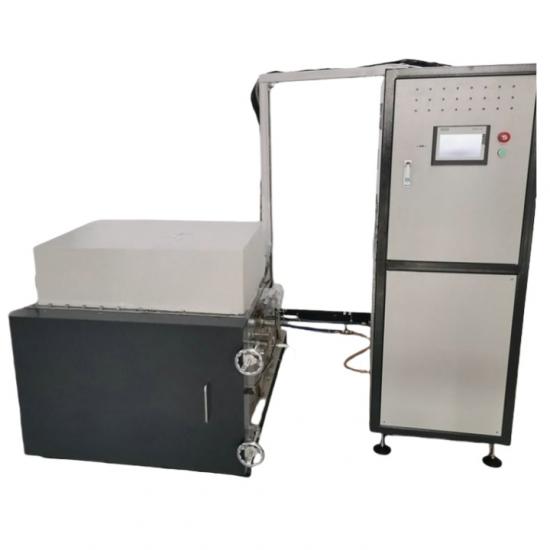
Ceramic Sintering Furnace: High-Precision Thermal Processing Equipment for Advanced Ceramic Manufacturing
A Ceramic Sintering Furnacee is a specialized high-temperature processing system designed for the densification, microstructural development, and performance enhancement of ceramic materials. As ceramics are widely used in electronics, structural components, energy devices, and functional materials, precise control of the sintering process is fundamental to achieving optimal density, mechanical strength, and reliability. The ceramic sintering furnacee provides the controlled thermal environment necessary for transforming ceramic powders or green bodies into fully consolidated, high-performance components.
The working principle of a ceramic sintering furnacee is based on the application of sustained high temperatures—often between 1000 °C and 1800 °C—to promote atomic diffusion and grain growth within ceramic materials. During this process, pores shrink or disappear, particles bond more tightly, and the material’s overall microstructure becomes significantly more uniform. Modern ceramic sintering furnaces are engineered to maintain exceptional temperature stability and homogeneity, ensuring that each stage of the sintering profile—heating, soaking, and cooling—is executed with precision.
A typical ceramic sintering furnacee consists of a robust high-temperature chamber, heating elements made from advanced alloys or ceramics, multilayer thermal insulation, and an intelligent temperature control system. Heating elements may include silicon carbide rods, molybdenum disilicide elements, graphite heaters, or tungsten components, depending on the maximum temperature and atmosphere required. The furnace chamber is lined with high-purity refractory materials to ensure chemical inertness and to prevent contamination of sensitive ceramic parts during processing.
One of the most important features of a ceramic sintering furnacee is its ability to operate under various atmospheres. Depending on the type of ceramic, different environments—such as air, inert gas, vacuum, or reducing atmospheres—are necessary to achieve proper densification and maintain material integrity. High-end furnaces may also include gas flow control systems or vacuum pumping equipment to ensure stable and repeatable processing conditions.
Temperature accuracy and uniformity are critical performance indicators for any ceramic sintering furnacee. Advanced models incorporate multi-zone heating control, programmable logic controllers (PLC), precision thermocouples, and software-based temperature management systems. These features allow operators to design complex sintering curves tailored to specific materials such as alumina, zirconia, silicon nitride, silicon carbide, ferrites, piezoelectrics, and electronic ceramics. Such precision is essential for preventing cracking, warping, or abnormal grain growth during sintering.
The ceramic sintering furnacee is widely used in industries including advanced ceramics manufacturing, electronic component production, dental prosthetics, structural ceramics, and research laboratories. For example, in electronic ceramics, sintering is crucial for producing multilayer capacitors, piezoelectric elements, and insulating substrates. In structural applications, high-temperature sintering enhances hardness, fracture toughness, and thermal stability, enabling ceramics to be used in cutting tools, bearings, and high-wear components.
3D Printed Furnace
Another key advantage of modern ceramic sintering furnacee technology is energy efficiency. Through improved insulation materials, optimized heating element design, and programmable thermal cycles, these furnaces minimize heat loss and reduce energy consumption compared with older traditional models. High-performance furnaces may also feature rapid heating and cooling functions to increase production throughput while maintaining product quality.
Safety and reliability are central to the design of a ceramic sintering furnacee. Equipment is typically equipped with overheating protection, automatic power cutoff, gas leakage detection, and multiple interlock systems. The furnace structure is engineered to withstand prolonged exposure to high temperatures, ensuring long-term durability and stable operation. Advanced models may include data-logging functions for traceability and quality assurance, making them suitable for industrial certification and mass-production environments.
In summary, the Ceramic Sintering Furnacee is an essential tool in modern ceramic manufacturing. With its high-temperature capability, precise atmosphere control, excellent temperature uniformity, and advanced safety features, it provides manufacturers with the ability to produce high-quality ceramic components that meet demanding performance standards across multiple industries. As the need for high-performance ceramics continues to expand, the ceramic sintering furnacee will remain a cornerstone technology in materials engineering and industrial production.